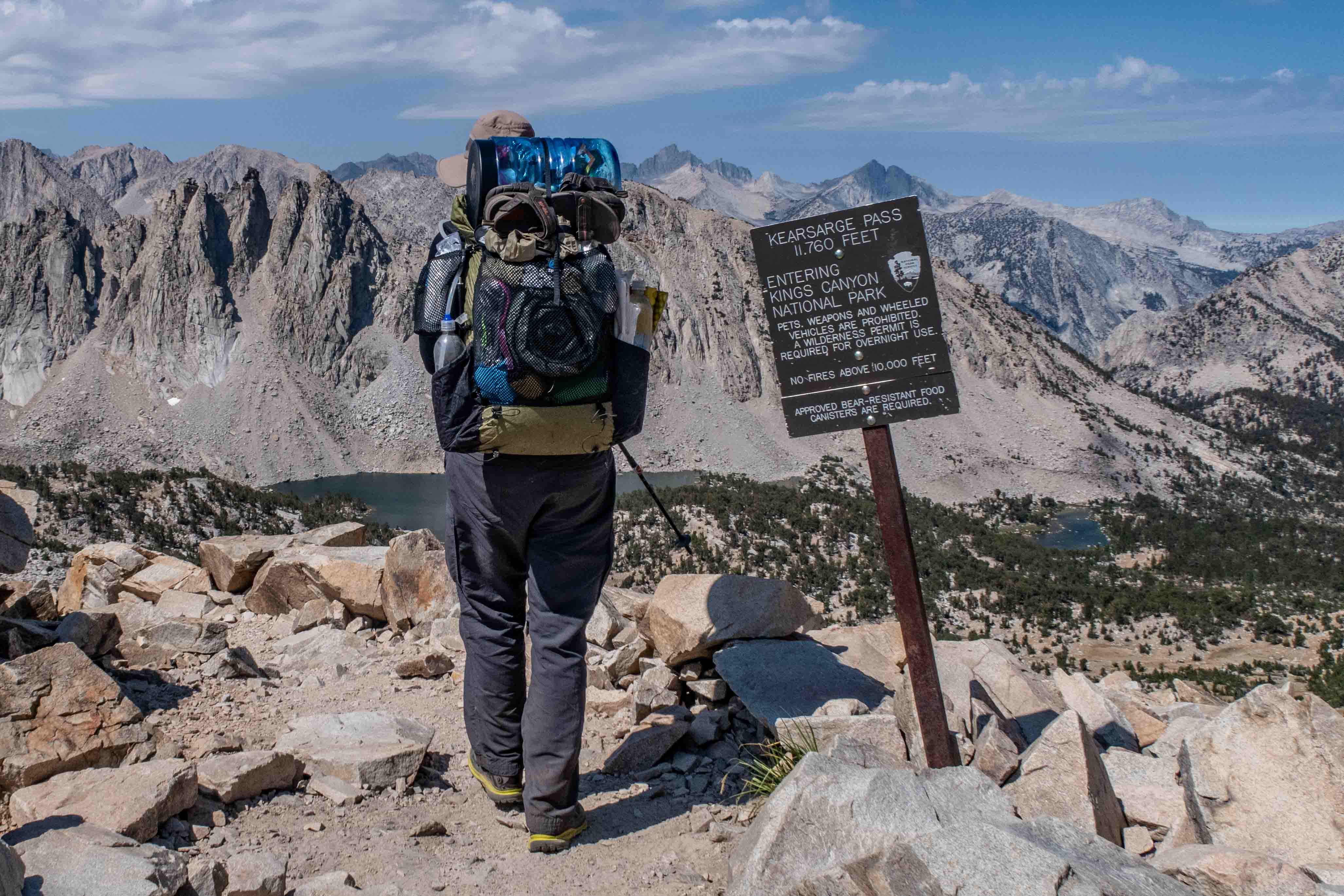
Canada has significant populations of both black bears and grizzly bears distributed across most of its wilderness areas. Understanding how these animals behave, what regulations govern food storage, and how to respond to an encounter are fundamental aspects of backcountry safety — not supplementary knowledge for technical mountaineers, but baseline preparation for anyone sleeping more than a kilometre from a road.
Bear Species and Distribution in Canada
Black bears (Ursus americanus) range across all provinces and territories. They are the more common encounter in eastern Canada, the boreal forest, and coastal forest regions of BC. Grizzly bears (Ursus arctos horribilis) are present in BC, Alberta, Yukon, Northwest Territories, and Nunavut, with a small population in northwestern Manitoba. The two species overlap in habitat in BC and Alberta's mountain parks.
Differentiating the two matters for understanding encounter risk and response strategy. Grizzlies have a pronounced shoulder hump, a concave face profile, and shorter rounded ears. Black bears have a straight or convex facial profile, taller ears, and no visible shoulder hump. Colour alone is unreliable — black bears can be cinnamon, blonde, or dark brown; grizzlies can appear nearly black in certain lighting.
Food Storage Regulations
Parks Canada and most provincial park authorities mandate bear-proof food storage in backcountry areas. The specific requirement varies by location:
Bear canisters
A hard-sided bear canister — such as the BearVault BV500, Garcia Backpacker's Cache, or Counter Assault Bear Keg — is required in many areas of BC, Alberta's backcountry zones, and wherever designated food storage infrastructure is absent. Canisters must meet specifications set by the Interagency Grizzly Bear Committee or an equivalent standard. Parks Canada publishes a list of approved containers for each park on its website.
Canisters are stored on the ground at least 60 metres from any sleeping area, tent, or cooking area. They are not tied to trees — attachment points give a bear leverage to drag the canister and work on it longer than it would otherwise. Canisters are opened by pressing two recessed buttons simultaneously, a task beyond bear paw mechanics but manageable with fingernails and a coin.
Bear hangs
Where canisters are not mandated, hanging food from a tree branch at least 4 metres above the ground and 1.5 metres from the trunk remains an alternative. Finding suitable trees at camp elevation — particularly in alpine terrain above treeline — is often impossible. The PCT method and the counterbalance method are the two most reliable techniques where hanging infrastructure exists.
Designated food storage infrastructure
Many established backcountry campsites in Canadian national and provincial parks provide bear poles, bear boxes, or cable systems. Using this infrastructure is mandatory where it exists. Trip reports and park websites confirm whether a specific campsite is equipped.
On-Trail Behaviour
The most effective bear encounter prevention strategy is noise. Bears that are aware of an approaching hiker have time to move away voluntarily. Surprised bears — particularly grizzly females with cubs encountered at close range — react defensively. Talking, clapping on blind corners, or carrying bear bells are all reasonable noise strategies. Bear bells generate consistent low-level sound; they are less effective than human voice in thick brush because the frequency is not as distinct.
Group size
Groups of four or more people are statistically less likely to have a serious bear encounter than individuals or pairs. This is well documented in published research from Parks Canada's wildlife program. Solo hiking in bear country is a personal risk decision — many experienced hikers make it regularly — but it changes the encounter probability profile.
Encountering a Bear
The first decision when encountering a bear is whether it is aware of the group. If unaware, increase distance quietly. If it is aware and moving toward the group, the response depends on the species and the behaviour:
Defensive encounters (surprised bear)
A grizzly or black bear making a bluff charge or approaching in an agitated manner is likely acting defensively. Stand your ground. A bluff charge typically stops or veers before contact. If physical contact is made by a grizzly in a defensive encounter, deploying bear spray — if not already deployed — or playing dead (face down, hands clasped behind the neck, legs spread to make rolling difficult) is the documented best response. Do not play dead with a black bear in a defensive encounter: black bears in defensive encounters almost always stop short of contact; if they do make contact, fight back.
Predatory encounters (bear follows or stalks)
A bear that approaches silently, at night, or that persists after deterrence attempts is behaving predatorially. This is uncommon but documented. In a predatory encounter — regardless of species — fight back with everything available. Bear spray, trekking poles, rocks, and noise have all been used successfully to deter predatory attacks.
Bear Spray
Bear spray — capsaicin aerosol at concentrations of 1–2% CRC — is the most effective deterrent in close-range encounters. The widely cited research on bear spray efficacy shows it stops aggressive bear behaviour at a higher rate than firearms in encounter scenarios. Canisters must be immediately accessible — carried in a hip holster, not in a pack pocket. Spray is effective at 3–9 metres depending on wind conditions. Deploy in a cloud aimed at the bear's face when it is within range, not as it approaches from distance.
Emergency Signalling and Communication
Emergency communication in Canadian backcountry operates through two channels: satellite-based devices and ground-level visual signals. A personal locator beacon (PLB) registered with the Canadian Beacon Registry transmits a distress signal directly to the Cospas-Sarsat satellite system and triggers a coordinated Search and Rescue response. PLBs require no subscription fee but transmit only a location; they do not allow two-way messaging.
Satellite messengers (Garmin inReach, SPOT Gen4) allow two-way SMS communication via satellite and can share GPS tracks with a contact at home. They require an active subscription. Both categories of device are water-resistant but not waterproof — store in a dry bag or waterproof pocket in sustained rain.
Ground-to-air signals
If communication devices fail, three of any signal — three whistle blasts, three fires in a triangle, three shots — is the international distress signal recognisable to SAR aircraft. A signal mirror is effective at ranges up to 16 km on clear days and is compact enough to carry in any first-aid kit.
Weather Awareness in Mountain Terrain
Mountain weather in Canada changes faster than forecast models typically capture at useful resolution. Afternoon convective thunderstorms are common from July through August across the Rockies and Coast Mountains. Lightning strikes above treeline are the leading cause of weather-related backcountry fatalities in Canada's mountain parks.
Standard practice: be below the treeline by early afternoon on any exposed route if the forecast shows thunderstorm potential. Monitor cumulus cloud development from midmorning. If anvil tops (cumulonimbus) appear, descent is the correct response — not waiting to see whether the storm develops fully.
Hypothermia risk extends well below what most hikers intuit as "cold" conditions. At 10°C air temperature with rain and wind — common conditions throughout the shoulder seasons in all of Canada's mountain regions — hypothermia can develop in unprotected hikers within an hour of exposure. A mid-layer, a wind shell, and dry socks carried in a waterproof bag address this risk at minimal weight cost.

